

How to design a great medical conference? From programme to community
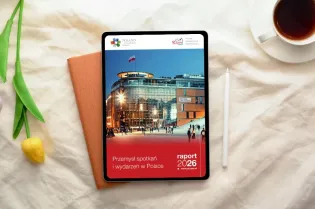
For many years, Kraków has been an important meeting destination for the medical and scientific communities. This makes it worthwhile to examine approaches that help organisers create conferences that not only deliver high-quality scientific content but also respond to the needs of participants. The recently published ICCA report, Wavelength Report: Science for Better Healthcare Meetings, demonstrates how insights into human behaviour, learning, and relationship-building can help design more engaging and valuable medical events.
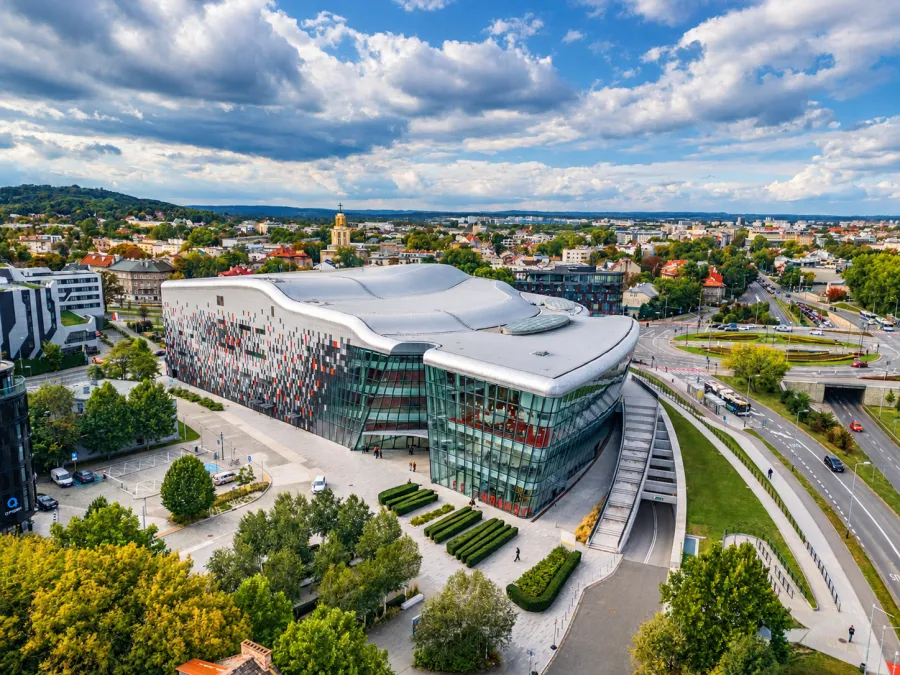
At the heart of every medical conference are lectures and research presentations. However, a successful conference goes beyond scientific content alone. It is a space where participants exchange experiences, build professional relationships, and find inspiration to improve clinical practice. The report highlights that the quality of a meeting depends not only on scientific excellence but also on the careful design of the entire participant experience, from venue selection and session formats to breaks and post-event engagement.
Scientific programme: experts, diversity, and active participation
When designing the programme, organisers should combine presentations by well-established experts, who attract audiences and ensure a high scientific standard, with fresh perspectives and topics that extend beyond the mainstream. It is also beneficial to create space for early-career researchers, representatives of other disciplines, and, where appropriate, patients.
Every session should have a clearly defined objective, whether it is to present the current state of knowledge, explore controversies, or develop solutions to a specific clinical challenge. Session titles and descriptions should clearly communicate what participants will learn and why the session is worth attending. Organisers should also avoid scheduling competing high-interest sessions for the same audience at the same time.
Formats in which participants simply listen should be limited whenever possible. Moderated discussions, case-based learning, workshops, and practical exercises make better use of expert knowledge. The report emphasises the importance of matching the format to the objective. While lectures can be effective for updating knowledge, developing clinical skills requires practice, feedback, and opportunities to apply new approaches.
The venue is part of the programme
Venue selection should be based on more than seating capacity and technical infrastructure. The venue itself contributes to the conference experience by influencing atmosphere, participant comfort, and opportunities for networking.
An effective layout places session rooms, exhibition areas, poster displays, and catering facilities close to one another. Excessive distances between programme elements make movement more difficult and reduce opportunities for spontaneous interactions.
Daylight, access to greenery, and outdoor spaces such as terraces, courtyards, or gardens can have a significant impact on the participant experience. Green spaces provide a break from intensive programmes, create more informal settings for conversations, and improve overall comfort. Quiet areas are also valuable, offering places to relax, prepare for presentations, or hold conversations away from noise.
Equally important is clear wayfinding. Signage should be visible from the moment participants enter the venue and consistently guide them to meeting rooms, poster sessions, catering areas, restrooms, and relaxation spaces. Simple maps, colour-coded navigation systems, and clearly marked stairs and lifts reduce stress and allow participants to focus on conference content rather than finding their way around.
Meeting participants’ expectations
When designing an event, organisers should remember that participants attend conferences for different reasons.
The report identifies three broad motivational profiles:
- Experienced attendees tend to place particular value on social connections.
- Mid-career participants often focus primarily on learning opportunities.
- First-time attendees tend to value personal, social, and educational outcomes equally.
- Senior researchers may place additional importance on opportunities to share expertise, strengthen their professional standing, and contribute to the development of their field.
A single format will therefore not meet everyone's needs. Programmes should combine knowledge-sharing and skills development with opportunities for collaboration, networking, and professional advancement. Participants seek not only practical value but also inspiration, energy, relaxation, and a sense of belonging.
Building this sense of belonging requires intentional effort. New participants may not always know how to join conversations or approach established experts. Welcome events, mentoring programmes, facilitated networking sessions, and small thematic groups can help. Creating multiple opportunities for the same participants to interact throughout the event is also important, as relationships develop more easily over repeated encounters. A clear sense of shared purpose can further strengthen feelings of community.
Breaks and spaces for relationship-building
Coffee breaks should not be viewed merely as technical pauses in the programme. They are among the most important opportunities for networking, exchanging experiences, and holding conversations that often cannot take place during sessions.
Breaks should be long enough not only to allow participants to get refreshments but also to move between sessions, rest, and engage in meaningful discussion.
Coffee stations and seating areas should be arranged in ways that encourage people to remain in shared spaces. Where possible, several smaller networking areas may be more effective than a single crowded gathering point.
Posters designed to start conversations
Traditional scientific posters often contain too much text, making key findings difficult to identify quickly.
The report highlights the “Poster 2.0” or “#betterposter” approach, associated with science communicator Mike Morrison. The concept is based on a clear hierarchy of information: a strong title, a large and highly visible central takeaway message, and prominent visual presentation of results.
Methodological details, sample size information, and study limitations remain important and should still be available, but they should not visually compete with the central message.
The primary purpose of a poster is to initiate conversation. This goal can be supported by adequate spacing between posters, opportunities to meet authors, and dedicated discussion periods. Digital versions may also be made available, provided that appropriate permissions, data protection requirements, and copyright considerations are respected.
The report recommends viewing this format as a useful option to explore rather than a mandatory standard for all presenters.
A conference does not end with the final session
The value of a conference also depends on what participants do with the knowledge they gain after returning to work.
Following the event, organisers should thank participants and speakers, provide summaries of key findings, and share presentations or recordings where permissions allow. Ongoing engagement can be maintained through thematic groups, online meetings, or collaborative networks.
Particular attention should be paid to the future development of presented research. A conference abstract can become the starting point for a scientific publication, while early-career researchers may benefit from mentoring and support in advancing their projects.
Organisers should also evaluate longer-term outcomes. Did participants implement new practices? Did collaborations emerge? Were new skills developed?
Measuring real conference success
A great medical conference is not the one that simply fits the largest number of presentations into a single day. It is the one that helps the right people find valuable knowledge, meet the right colleagues, and apply those experiences in their future work.
Long-term impacts that remain visible well after the event has ended are the true measure of a conference’s value and influence.
The approach proposed in the Wavelength Report: Science for Better Healthcare Meetings can be applied not only to medical conferences but to many other types of professional events as well.
Published in September 2026, the ICCA report Wavelength Report: Science for Better Healthcare Meetings was developed under the leadership of Mike Morrison in collaboration with a multidisciplinary research team. It draws on a review of scientific literature from fields including psychology, spatial design, and education, as well as studies relating to medical and scientific meetings. The authors also incorporated insights from association representatives and meetings industry professionals. They note that the quality of available evidence varies and that many conclusions will require further validation through practical application in conference settings.