


EuroPython - Building a More Inclusive and Welcoming Conference
In July 2026, Kraków welcomed the international Python community to EuroPython 2026, hosted at the ICE Kraków Congress Centre. Python, one of the world’s most popular programming languages, is widely used in data analysis, artificial intelligence and software development. The conference brought together more than 1,200 participants from around the world for a celebration of technology, open-source collaboration and community.
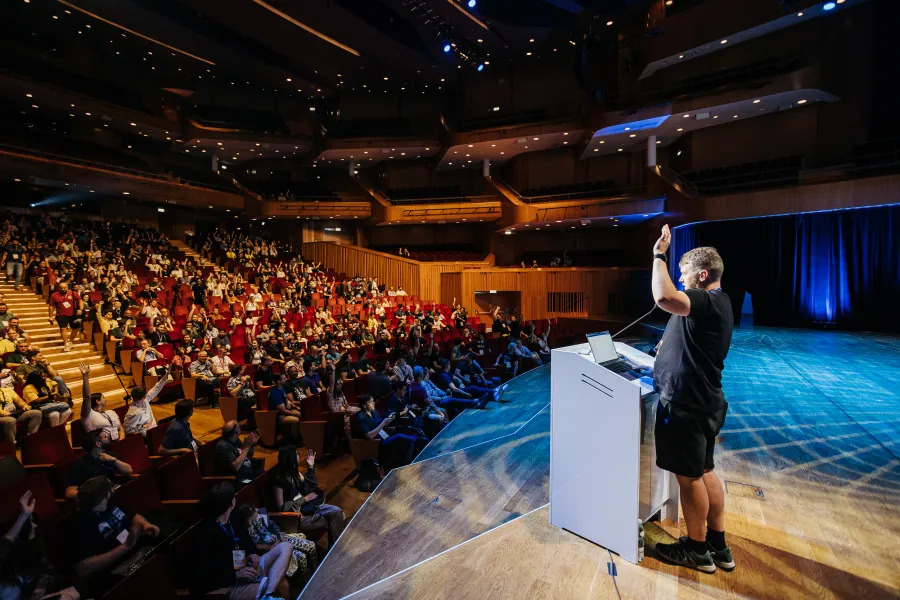
As the Kraków Convention Bureau, we were particularly impressed by the attention paid to creating an inclusive, welcoming and participant-centred event. From practical accessibility measures and dedicated spaces for relaxation to initiatives supporting underrepresented groups in tech, EuroPython demonstrated how thoughtful planning can make a real difference to the conference experience.
We believe these practices offer valuable inspiration for destinations and event organisers looking to make their events more accessible and inclusive. We spoke with Mia Bajić the Vice Chair of EuroPython Society to learn more about the ideas behind these initiatives, the lessons learned from this year's edition and how Kraków helped create an environment where everyone could feel they belonged.
Read our interview to discover the story behind EuroPython 2026 and explore practical ideas for creating more inclusive events.
EuroPython 2026 took place in July at ICE Kraków. Looking back, what would you consider the biggest successes of this year’s edition?
We're very happy with how this year's edition turned out. In total we sold 1,386 tickets, including remote participation, with 1,263 people joining us on site in Kraków. The community came from all over: Poland was the largest group with 236 attendees, followed by the UK (169), Germany (154), the United States (96), the Netherlands (91), Czechia (83) and Spain (55).
The clear highlight was having Guido van Rossum, the creator of Python, with us in Poland for the first time. A conversation with him was part of our keynote programme, and for many attendees, especially those newer to the community, being in the room for that was something they'll remember for a long time.
Beyond the big names, though, what stayed with us most was the atmosphere: the hallway conversations, the collaborative sprints with EuroSciPy – focused sessions where participants worked together on Python and open-source projects – and seeing open-source communities come together to develop projects and strengthen their communities.
One of the aspects that particularly caught our attention was the conference's strong focus on inclusivity.
Our starting point is simple: we want everyone who walks through the door to feel that they belong there. Conferences can be intense: long days, large crowds, a lot of social interaction, and that's before you factor in that tech spaces haven't historically been welcoming to everyone equally. Plenty of people arrive not quite sure whether the event is built for them.
The Python community has worked on this for a long time, through initiatives such as PyLadies, and EuroPython tries to carry that forward. This year we ran a PyLadies Day with a dedicated programme of workshops, a community lunch and a group run, all for people from groups underrepresented in computing. None of it is complicated, but it changes who feels able to show up and once people are there, the whole conference is better for it.
We noticed several thoughtful solutions designed to make participants feel comfortable and respected—for example, coloured lanyards indicating photography preferences and stickers allowing attendees to communicate their preferred way of interacting or being addressed. Some of it is about signalling, and some of it is about practical provision.
On the signalling side, coloured lanyards let people indicate whether they're comfortable being photographed, and stickers allowed attendees to communicate things like their pronouns or how much physical contact they're happy with — a "happy to hug" sticker, for example, saves everyone an awkward moment. We also had a sticker for first-time attendees, which made it easy for others to say hello.
On the practical side, we provided a quiet room and a separate low-stimulation space for anyone who needed to step away from the noise, and childcare so that parents could actually attend the talks. Accessibility information was published on the website in advance, and during registration we asked attendees whether they had any particular needs and then followed up individually to ask what specifically would help. In previous years, when we had visually impaired participants, we made sure a volunteer was available to accompany them so they were never left to navigate alone.
We also had gender-neutral toilets, and tampons, pads and deodorant freely available in all bathrooms.
Throughout the event our Code of Conduct team was visible and approachable. It was deliberately a mixed group, including a Polish speaker, as well as men and women, so that anyone with a concern had someone they'd feel comfortable talking to.
From your perspective, how have participants responded to these initiatives?
The response has been consistently positive, and the most common reaction is some version of "this should just be the norm", which we take as a compliment.
What we hear most often, though, comes from people for whom these measures are the difference between attending and not attending. Caregivers who could only come because childcare was available. People who find large conferences genuinely difficult and who used the quiet room to get through the day rather than going home early. Those determine who is in the room at all.
Many conference organisers are looking for practical ways to make their events more inclusive and accessible. Based on your experience, what advice would you give to destinations and event organisers who would like to introduce similar practices? Which initiatives have the biggest impact while remaining relatively easy to implement?
The encouraging thing is that the highest-impact measures are often the cheapest. A clear, properly enforced Code of Conduct with a visible team behind it is the single most important foundation, and it costs very little beyond thought and preparation. Stickers and coloured lanyards are almost free and remove a surprising amount of social friction. Something small for first-time attendees helps people find each other.
Beyond that, the biggest step is simply asking. Include a question about access needs in the registration form, and then actually follow up and ask what would help. People know what they need, and the answer is usually easier to accommodate than organisers expect. A quiet room often just means one room you weren't otherwise using.
For destinations specifically, the venue matters enormously: step-free access and space that can be adapted for quiet or childcare use make an organiser's job far easier from the outset.
Finally, can you already share where the EuroPython community will meet in 2027? Has the host destination already been selected, and what can attendees look forward to next year?
We're delighted to say that EuroPython will return to Kraków in 2027. This year was a real success for us, and the support we've had from the Convention Bureau and from the city has been a significant part of that. Staying for another year means we can build on what worked rather than starting from scratch, and we're already looking forward to welcoming the community back.