


Tourism Forum 2024: New Challenges and Development Perspectives
On December 13, the Krakow City Council Chamber hosted the Tourism Forum – one of the most important events in the calendar of our city’s tourism industry. The December meeting was devoted to tourism market research, current trends in this field, and digital transformation in tourism. The event gathered a wide range of participants: representatives of city authorities, cultural institutions, universities, tourism organizations, and experts and entrepreneurs from the tourism sector.
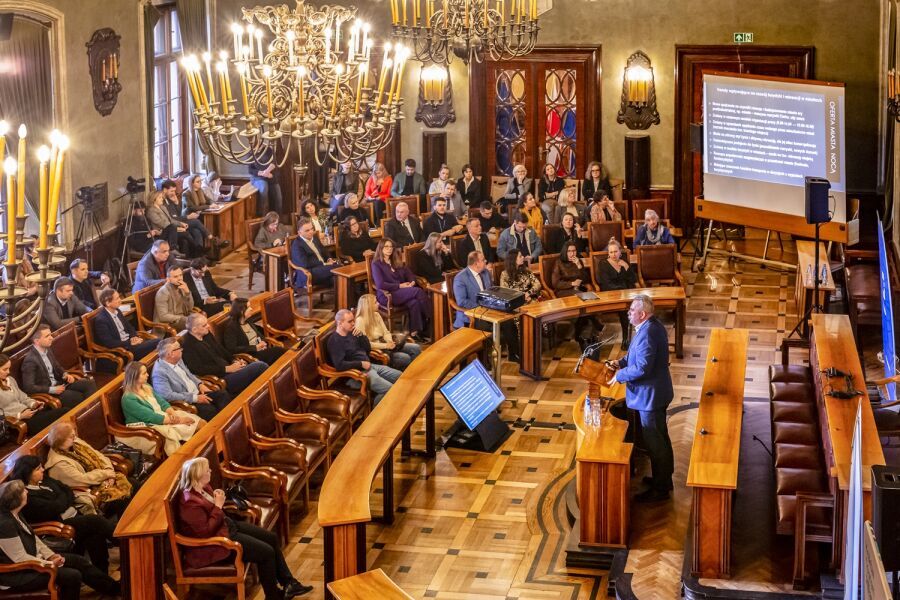
The forum was opened by Aleksander Miszalski, Mayor of Krakow, who emphasized in his speech the importance of tourism as one of the key sectors of the local economy. The consistent development of tourism, including the meetings industry, is a priority for our city, he said, while pointing out the important role of the "Krakow Sustainable Tourism Policy for 2021-2028". The Mayor also noted that Krakow, thanks to its convenient air connection network and attractive tourist offer, often becomes the first choice for visitors to Poland.
Last summer turned out to be record-breaking - according to data from mobile applications collected by Selectivv, the capital of Małopolska was visited by over 4.8 million guests in the period June-September 2024, including nearly 400 thousand visitors from abroad. This is proof of Krakow's growing popularity on the international stage, but also a challenge for the city, which must find a way to reconcile the needs of visitors with the comfort of life of its residents. The Krakow Tourism Forum was therefore not only a space for exchanging experiences, but also an inspiration for further actions for the sustainable development of the tourism industry.
Natalia Kulec-Greń, Acting Director of the Department of Tourism of the Krakow City Office, introduced the participants of the event to the main theme of the meeting and discussed the key activities and prospects of Krakow to improve the quality of tourism. She emphasized that tourism generates over 8% of the city's GDP and creates nearly 40 thousand jobs, and the quality of services has become a priority of the city's tourism policy. Presenting the structure of tourist traffic this year, she indicated that the tourist season is extending towards the autumn months, and January 2024 attracted more guests to Krakow than June, which began the holidays.
Sustainability is city thinking
“Sustainability is city thinking” - currently, it is not the quantity that counts, but the quality of tourist services provided and the comfort of city users. Global trends and customer expectations in the hotel industry show that the vast majority of travelers take sustainability into account when planning a trip and require information on this subject.
Kraków is trying to solve the challenges related to the dynamic development of tourism, among others, through activities for sustainable development, such as the Respect Kraków initiative, the establishment of the institution of the Night Mayor and the Sustainable Night Economy Commission, the implementation of projects financed from external sources (Tourism in Balance, SCT HUB - Codesign the Future of Sustainable Cultural Tourism), the development of tourist products and routes aimed at, among others, dispersing tourist traffic, active participation in the global GDS-Index ranking. (Global Development Sustainability Index). At the end of her speech, Director Natalia Kulec-Greń presented projects to be implemented in 2025, including further certification of enterprises and preparation of an action plan for destination certification, tourism market research and the organization of congress events - including as part of the Polish presidency of the EU Council, as well as the "Historical Cities 3.0" conference.
The subject of the benchmarking initiative GDS-Index was presented in more detail by Małgorzata Rajwa from the Kraków Convention Bureau, presenting the results for Kraków. GDS-Index is a global ranking that assesses cities in terms of sustainable development in tourism. It is based on 77 indicators in four areas: environment, society, supply chain and destination management. Kraków joined the GDS-Index as the first city in Poland in 2023, improving its position from 80th to 72nd place a year later. Despite this, the city still remains in a low position compared to leaders such as Helsinki. Currently, 20% of hotel facilities in Kraków are certified. The results of cities at the top of the ranking are over 80% of certified hotels. It is necessary, first of all, to increase the number of certified hotel facilities, but also conference and congress facilities and airports, and to take initiatives for sustainable destination management.
Agnieszka Kukałowicz, CEO of Qtravel, discussed the application of Big Data in the analysis of tourist data. She presented methods of collecting and processing data and their use to personalize offers, predict consumer behavior and optimize marketing activities. She emphasized the importance of real-time data analysis, as well as the role of precise reporting and the structure of the Big Data system in effective tourism management.
The results of qualitative research on the experiences of tourists visiting Krakow for short-term stays were presented by Carolina Pietyra, Director of the Krakow Festival Office. The conclusions indicate that tourists perceive the city primarily as accessible to sightseeing, but their experiences are often superficial and chaotic. Krakow functions for many as a base for trips to nearby attractions. She emphasized the need to create a coherent tourist narrative and to encourage tourists to engage more deeply in unique experiences related to the city.
Modern methods of analyzing tourist traffic in Krakow, using data from mobile devices, were presented by Marcin Augustyniak from Selectivv. He drew attention to the importance of real-time data analysis and a large research sample, including data from 350,000 applications and 17 million mobile websites. The results from the June-September 2024 period indicate an increase in the number of visitors compared to the same period last year. There is a clearly noticeable increase in one-day visitors, who constituted the majority of over 4.8 million guests. Domestic tourists still predominate among tourists (overnight visitors), although the share of regional and foreign tourists has increased. The largest number of domestic tourists come to Krakow from the Masovian, Silesian and Subcarpathian provinces. When it comes to foreign tourists, this group is dominated by people arriving from Germany, followed by Slovakia, Great Britain and the USA. Traffic analyses also showed flow patterns between the Old Town and Kazimierz, which are key to understanding the city's night-time economy. Locals and domestic tourists definitely stand out. The first group dominates between 9:00 p.m. and 5:00 a.m. on Saturday nights, while domestic tourists predominate during these hours on Friday nights.
The role of data in shaping tourism strategies
The Krakow Tourism Forum concluded with a debate on “Data in tourism – the key to success or an unnecessary formality?”. Participants unanimously emphasised that collecting and analysing data is not only a need these days, but above all a necessity. Data enables monitoring the city’s tourist function, identifying challenges and opportunities, and planning effective promotion strategies. They are particularly important in the context of building the city’s image, adapting the offer to the needs of tourists, and improving the quality of services provided.
Krakow is an excellent example of a city that actively uses the opportunities offered by data. As part of the Smart City project, implemented by the Municipality of Krakow, information is collected from various fields, from urban infrastructure to demographic and behavioral data. Thanks to cooperation with external entities, such as technology companies, this data is not only collected, but also processed and made available in a way that allows for their practical use. Cross-sector cooperation and investing in modern analytical tools are key elements that allow the city to better respond to the changing needs of its users. During the debate, the topic of the importance of cultural and sports events in promoting the city was also developed. Analyses of tourist traffic in the context of events such as the Great Dragon Parade or marathons and other sports events organized in Krakow provided interesting conclusions. Demographic data of participants in sports events show that about 60% of runners stay in Krakow for at least one night, which generates additional benefits for the local economy. In turn, residents dominate among the participants of the Night Spectacle on the Vistula, organized on the eve of the Dragon Parade. At the same time, among the foreign participants, as many as 25% were guests from the United Arab Emirates. This indicates that such events can build the city's image among new groups of visitors.
Challenges in collecting and using data
Although the role of data in tourism is undeniable, the forum participants pointed out significant challenges related to their collection and processing. One of the biggest problems is the lack of a unified system for data integration and limitations resulting from legal formalities and various recording formats. The costs associated with data acquisition and difficulties in maintaining their validity also constitute a barrier. It is necessary to strengthen cooperation between public institutions and the private sector in order to create effective systems for the exchange of information. Meeting these challenges will allow the process of digitalization and integration of data on Krakow's tourism to begin.
Conclusions and future prospects
The December Tourism Forum showed that the tourism industry faces many challenges, but at the same time has huge potential for development. Investing in modern technologies, integrating data from various sources and building cross-sector partnerships are key elements of the strategy that can help the city further strengthen its position. As emphasized by Joanna Węglarczyk, Deputy Director in the Department of Planning and Development of the Polish Tourism Organization, research indicates that Krakow is the strongest tourism brand in Poland. The development of new technologies and the digitalization of tourism is one of the ways to strengthen this position.