


The City at Night – The Night Mayor Focuses on Dialogue and Best Practices
For over a year and a half, the Night Mayor has been working to improve residents’ quality of life and to organize the city’s nighttime environment. At the core of his responsibilities are negotiations with venue owners—particularly on minimizing noise and complying with regulations of the Cultural Parks Resolution—as well as interventions in problem areas and participation in night patrols alongside municipal services.
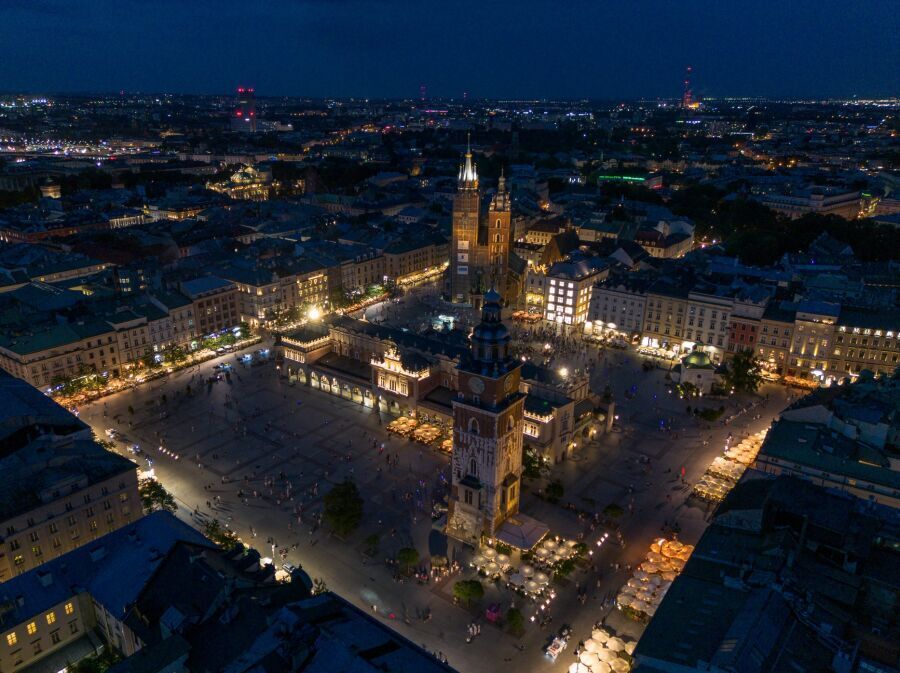
It is important to remember that the city at night is a space shared by residents, entrepreneurs, and tourists. For years, the diversity of needs among these groups has posed challenges—especially in areas with vibrant nightlife. The appointment of Night Mayor Jacek Jordan and the establishment of the Night Commission were responses to these issues and part of the city’s sustainable tourism policy. These initiatives created a platform for dialogue among residents, business owners, district council representatives, and municipal services. This cooperation facilitates the development of ideas and solutions whose effects are not always immediately visible.
Noise, Cultural Park Regulations, and Safety
The role of the Night Mayor is not merely advisory—it primarily involves direct discussions with venue owners, interventions in problematic locations, and joint patrols with municipal services. These actions make it possible to react quickly to reported issues. To date, the Night Mayor has negotiated with over 20 entities across different parts of the city, emphasizing the need to respect principles of good neighborly relations, including nighttime quiet hours and limits on amplified sound. Jacek Jordan has also initiated and supported increased inspections of outdoor dining areas, including compliance related to road lane occupancy and pedestrian space.
Although the Night Mayor is not a member of uniformed services, he frequently accompanies them during late evening and nighttime hours, supporting their work. In 2025, he took part in 18 night patrols in the city’s most heavily burdened areas. These efforts resulted in improved compliance with Cultural Park regulations and a reduction in noise-related disturbances. Notably, during the summer season, offenses related to disturbing public order dropped by 46 percent. This clearly demonstrates that cooperation between the Night Mayor and municipal services enhances safety and residents’ comfort. It should be emphasized that in 2025, the Mayor of Kraków allocated PLN 200,000 to the police and PLN 400,000 to the municipal guard for additional foot patrols during the summer season. As a result of joint actions, a significant improvement was recorded: from June to September 2025, violations related to disturbing peace, public order, or nighttime rest decreased by 46 percent. The continuation of additional patrols during the same period is planned for this year.
In February 2025, the Kraków City Council unanimously adopted the so-called anti-noise resolution, which incorporated demands put forward by the Night Commission and the Night Mayor. It introduced a ban on the use of noise-generating devices between 10:00 p.m. and 6:00 a.m. Although the Voivodeship Administrative Court declared the resolution invalid, it remains in practical force—the city, following the recommendation of the Night Commission, has appealed the ruling. Until a final decision is issued, the municipal guard may continue to issue fines for violations. In response to residents’ complaints, a new rule was also introduced into the participatory budget regulations adopted in 2026: at the project evaluation stage, initiatives will now be assessed for their potential to cause noise during nighttime quiet hours.
The Night Commission also addressed the issue of recurring discos and musical performances held on Kraków’s Main Market Square late into the night. While these events are attractive to some users of the city’s nightlife, for residents of the historic center they bring daily noise and inconvenience. Organizers register such events as public assemblies, which in practice exempts them from noise regulations and limits the city’s role to maintaining an assembly register. Disbanding such gatherings is possible only in cases of serious threats to safety. In order to find a solution, the Mayor of Kraków—at the request of the Night Commission—approached the Commissioner for Human Rights and the Minister of the Interior and Administration, seeking legal changes that would reconcile the right to assemble with residents’ right to peace and quiet.
Neighbor-Friendly Practices
An equally important aspect of the Night Mayor’s work is education and building public awareness around the nighttime economy. These objectives are reflected in the “Respect Kraków” campaign and in a catalog of good practices for the gastronomy sector, which places particular emphasis on noise reduction. These guidelines have been distributed to over 1,000 city contractors in the hospitality industry. Work is also underway on the implementation of a “Neighborhood-Friendly Venue” Certificate, aimed at promoting responsible business practices among entrepreneurs.
These initiatives are designed to strengthen the collective sense of responsibility for the shared urban space. They are long-term in nature and, while they may not deliver immediate results, they are essential for achieving a tangible improvement in quality of life. In this context, the Night Mayor serves not only as a mediator but also as a key supporter in maintaining a balance between urban development and residents’ comfort.
Information on the activities of the Night Mayor and the Commission for the Sustainable Nighttime Economy can be found in the dedicated section of the krakow.pl website and in the Public Information Bulletin.