


Nighttime Kraków under control
The city is preparing for the summer tourist season. How does Kraków plan to ensure the safety and comfort of its residents? Jacek Jordan, the Night Mayor, talks about the work of city services, the anti-noise resolution, and the future of the city’s nightlife.
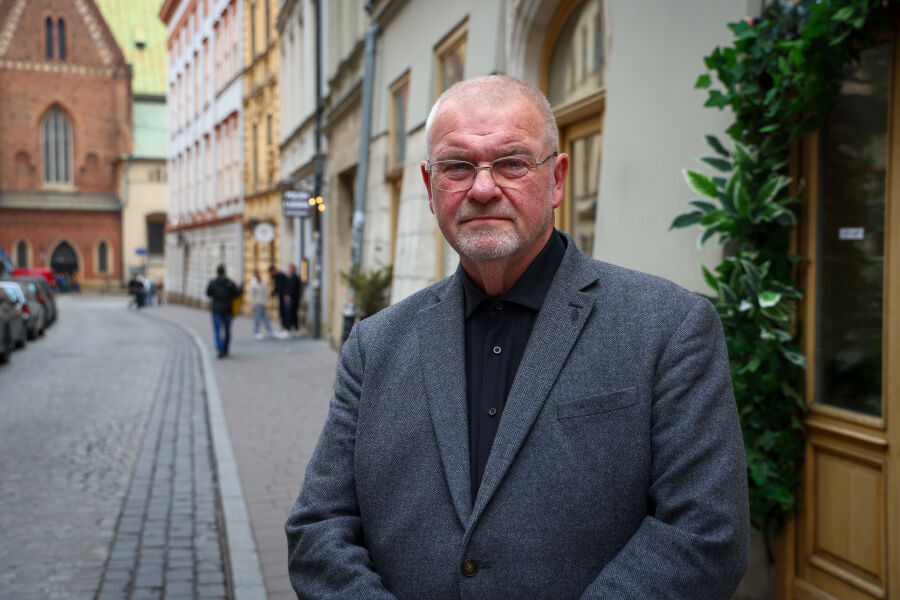
What does the role of the Night Mayor involve, and what challenges are associated with managing Kraków’s nightlife?
The role of the Night Mayor may seem new or unusual, but this model has existed in Europe for many years and originated in Amsterdam. Today, similar solutions operate in many cities. In Kraków, the position was created by Mayor Aleksander Miszalski, with the main goal of organizing and civilizing the city’s nightlife.
At the beginning, there were expectations that someone like a “sheriff” would appear to impose order. But that’s what the municipal guard and police are for. My role is to be the manager of the night.
Within the commission, we deal with many aspects of how the city functions after dark. It’s not just about nightlife in terms of clubs or gastronomy, but also logistics, transport, business activity, cultural offerings—everything that happens in Kraków after dusk. And these activities are increasing year by year.
There are also ongoing issues: residents’ complaints, requests for interventions, negotiations and discussions with various city departments, because many actions require coordination. Additionally, there are night patrols, interventions, and on-site inspections. We very often meet with residents, managers, and venue owners. There is a lot of work, but it gives me a sense that I am doing something tangible for this city—not just holding the title of “Night Mayor.”
Kraków is entering the peak tourist season. Is the city better prepared than last year?
Kraków was already very well prepared for the tourist season last year. Not only the Tourism Department, where I work, oversees this, but also other departments responsible for public space and city services.
We do not expect a sudden increase in the number of tourists this year. Of course, visitor numbers grow each year, but not at a level that could catch the city off guard organizationally.
Are additional municipal guard patrols or other measures planned for the holiday season to improve night-time safety?
As last year, the Mayor has again allocated additional funds for the police and municipal guard to increase patrols during the peak season—from early June to the end of September. This also means intensifying nighttime activities not only by services but also by the Night Mayor’s team.
In winter, we appear in the city space only occasionally, mainly when we receive reports or requests for intervention. However, since March we have been more active. In April alone, we spent three weekends patrolling the city. These are joint patrols with the municipal guard and police. We act as additional eyes and ears for services, but we also collect data and observations for our daily work.
What problems do Kraków residents report most often?
The most frequently reported problem is noise. We operate somewhat in a legal grey area because Polish law recognizes traffic and industrial noise, but there is no category for “nightlife noise,” which makes effective intervention difficult at times.
The municipal guard can conduct noise measurements only within cultural park areas. This mainly applies to music events but does not cover everyday nightlife. On one hand, there is the resolution regarding cultural parks, which prohibits the emission of sound into public space in these areas—this is the basis for interventions. On the other hand, there is also the City Council’s anti-noise resolution. Although it has been challenged (we are awaiting a ruling from the Supreme Administrative Court), it remains in force. In our work, we focus heavily on negotiations, trying to develop solutions together.
What issues do entrepreneurs point out?
Entrepreneurs often note that current regulations are too restrictive and that there should be more freedom in conducting business. As Night Mayor, I have no influence over business law, as most regulations operate at the national level.
During meetings of the Commission for a Sustainable Night-Time Economy, representatives of various groups sit at one table: services, municipal companies such as waste management and public transport, the tourism industry, city departments, as well as residents and entrepreneurs. We are learning to listen to one another’s arguments, needs, and expectations. Both sides are seeking compromises, and we receive feedback from residents and businesses that this is a good direction for dialogue.
How do you see the future of Kraków’s nightlife? Is it possible to balance a tourist-friendly city with a comfortable place to live?
Of course—if I thought it wasn’t possible, I wouldn’t be doing this job. Among other things, we have prepared a set of “best practices.” These are thirteen principles for hospitality venues aimed at organizing key issues and improving relations with the surrounding community.
The next step is creating the “Neighbour-Friendly Venue” certificate, which will be awarded by the Mayor of Kraków. It will signal to guests that they are visiting a place that cares about good relations with residents and its surroundings.
Statistics from the police and municipal guard show a decrease in the most troublesome offenses, such as disturbances and noise. That’s a major success. However, the most important feedback for me comes from residents. When I hear that they feel a real improvement in their quality of life, I treat it as the greatest reward in my work.
Interview by Jolanta Tęcza-Ćwierz