

Tourism works for Kraków
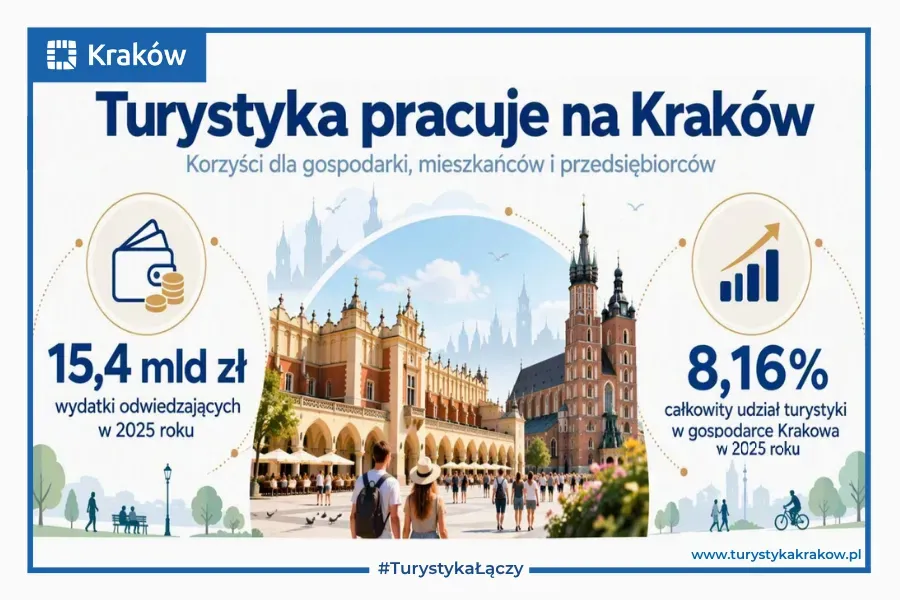
Visitors to Kraków spent approximately PLN 15.4 billion in 2025. It is estimated that around PLN 9.5 billion of this amount remained directly within the city’s economy. Behind this figure are jobs, contracts for businesses, and the development of services. A hotel stay, dinner at a restaurant, or ticket to a concert also supports businesses with which visitors have no direct contact, including suppliers, laundries, transport companies, and technical service providers. The impact of a hotel bill extends far beyond the front desk.
Greater value in a stronger economy
Kraków’s economy is now larger and more diversified than it was nearly a decade ago. Technology, modern business services, science, and creative industries continue to grow. At the same time, tourism is generating increasing value for the city and strengthening connections between multiple sectors of the economy.
Preliminary results of a new study on the economic impact of tourism on Kraków’s economy in 2025 are now available. The analysis shows how visitor spending translates into business activity, employment, and income within the city, while also taking into account indirect effects generated through supplier networks and the continued circulation of money within the local economy. The full report is expected to be published at the end of 2026.
Initial findings indicate that tourism accounted for an estimated 8.16% of Kraków’s economy in 2025. This means that tourism’s significance extends far beyond tourists’ direct spending. The study also estimates that every złoty of tourist expenditure retained in Kraków generates approximately PLN 1.53 in total economic effects within the city.
In 2016, visitors spent nearly PLN 5.5 billion in Kraków. Nine years later, that figure had risen to PLN 15.4 billion, almost tripling, while the number of visitors increased by 33.7% over the same period. Even after accounting for price changes, average spending per visitor was roughly one-third higher.
Hotels and restaurants were not the only beneficiaries. Culture, entertainment, recreation, retail, and guide services also profited from visitor spending. This is a clear sign that Kraków’s tourism sector is undergoing a qualitative transformation. The city is no longer growing solely through increasing visitor numbers; it is becoming increasingly successful at attracting travellers who spend more and make use of a broader, higher-value offer.
For Kraków, which must balance tourism development with residents’ quality of life and the limited capacity of urban space, this is a particularly important shift. It suggests that the city should continue developing experiences that encourage longer stays and greater use of local services. Generating more value from each visit and distributing benefits more broadly across the city is especially important where space is limited and resident well-being must be protected.
Jobs across many professions, including for students
Hotels and restaurants employ receptionists, chefs, waiters, and housekeeping staff. Their operation also creates demand for accountants, IT specialists, technicians, drivers, local producers, and craftspeople.
Congresses and large events generate contracts for translators, graphic designers, catering companies, and specialists in sound, broadcasting, and registration systems. Additional benefits arise when employees and suppliers spend their earnings on other goods and services.
Many of these professions are difficult to replace with automation or artificial intelligence. The quality of the visitor experience still depends on personal interaction, expertise, creativity, and the ability to respond to individual needs.
Reducing this market to “low-paid jobs” undervalues both roles requiring specialist expertise and the contribution of other professions to residents and the city’s economy. Kraków needs a broad labour market that accommodates different skills, experience levels, and educational backgrounds. Tourism creates employment opportunities for university graduates, vocationally trained workers, experienced professionals, and people entering the workforce for the first time. Each of these groups has a place in a growing city.
A previous study covering 2016 estimated tourism-supported employment, including effects on related sectors, at approximately 40,600 jobs. Updated figures will be included in the forthcoming report.
Students are also an important part of the labour market. According to Statistics Poland (GUS), 136,300 students were enrolled at Kraków universities during the 2025/2026 academic year. Employment in hospitality, gastronomy, customer service, and events allows students to earn income during their studies, develop language skills, and gain organisational and technical experience that can be valuable throughout their future careers.
Recovery of international tourism
In 2025, Kraków welcomed 8.79 million overnight tourists, including 1.69 million international visitors. In 2019, the city recorded 3.05 million international overnight tourists, meaning the recovery of this segment remains an important challenge despite high overall visitor numbers.
This matters for the local economy. Preliminary findings indicate that international visitors spend more and are more likely than domestic tourists to use a wide range of services, including accommodation, paid attractions, and organised tours. In some categories, international visitors spend several times more than domestic travellers on average.
These findings support efforts to diversify source markets and tailor promotion to specific audiences. Research data are used to plan marketing activities, identify priority international markets, select tourism products for promotional campaigns, and guide cooperation with journalists and influencers.
The value of these findings lies not only in their scope but also in their methodology. The research combines visitor surveys (3,218 respondents interviewed between July and December), data from Statistics Poland, and big data analyses based on geolocation and payment information. It covers both overnight tourists and same-day visitors, providing a comprehensive picture of tourism flows. The continuity of tourism research, conducted in Kraków for more than 20 years and enhanced by new data sources in recent years, provides a reliable foundation for identifying trends and planning future development.
An example of data-driven tourism management can be seen in Kraków’s international marketing activities. In 2025, the city hosted 60 study visits for journalists and influencers from 17 countries. Coverage appeared in publications such as National Geographic, Traveller, and Kaleidoscope, the in-flight magazine of LOT Polish Airlines.
These features highlighted Kraków’s UNESCO heritage, culture, craftsmanship, local cuisine, urban routes, and experiences beyond the traditional tourist trail. Promotional messaging also included the principles of the Respect Kraków initiative.
Promotional activities are targeted at specific source markets and visitor profiles, and are tailored to their interests. They present what visitors can experience in Kraków while encouraging respectful behaviour toward residents.
Today’s visitors to Kraków increasingly make intentional travel choices, seeking authentic experiences, local culture, and high-quality leisure opportunities. At the same time, the visitor profile is becoming younger. The largest visitor group is aged 20–29, while most tourists are between 20 and 44 years old. These travellers actively plan their own trips and are interested not only in major landmarks but also in cultural events, gastronomy, and lesser-known locations that reveal a more authentic side of Kraków.
The city’s appeal is reflected not only in the profile of its visitors but also in the number of people choosing Kraków as a travel destination. In 2026, Kraków recorded 16.25 million visitors, including 13.7 million domestic visitors and 2.55 million international visitors.
The congress ends, the benefits remain
The meetings industry plays a particularly important role.
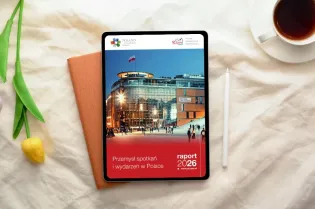
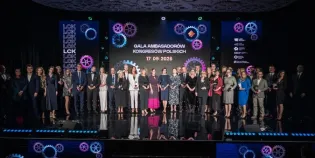
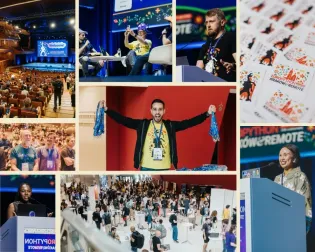
In 2025, Kraków hosted 5,341 business meetings and events with more than 50 participants, almost 15% more than the previous year. Congresses, conferences, and trade fairs generate spending on accommodation, food and beverage services, transport, and event delivery. Participants also visit museums, attend concerts, go sightseeing, and shop.
According to Kraków Convention Bureau, based on Kraków and national studies, the average delegate spends approximately PLN 3,000 in the city. For an event with 1,000 participants, this translates into around PLN 3 million in local expenditure.
The meetings calendar extends throughout the year, including periods outside the traditional leisure tourism season, helping businesses plan ahead and reduce seasonal fluctuations in demand.
The benefits continue after events have ended in the form of what is known as legacy: knowledge, skills, partnerships, and initiatives that benefit residents. In Kraków, examples include public lectures, workshops, and health-awareness programmes accompanying medical congresses. The expertise gained by local specialists can later benefit patients, students, and municipal institutions.
The development of such initiatives is supported by the Legacy Projects Bank, operated by Kraków Convention Bureau.
Infrastructure that benefits residents
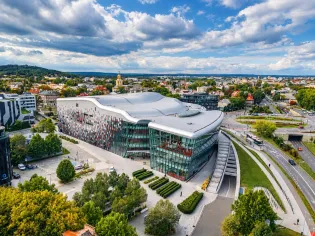
Demand for accommodation and event space encourages investment in hotels, conference venues, and technical infrastructure. Facilities such as ICE Kraków Congress Centre, EXPO Kraków, and TAURON Arena Kraków enable the city to host events of international scale.
The same infrastructure serves local residents. ICE Kraków hosts concerts, TAURON Arena stages entertainment events and sporting competitions, while its Small Hall accommodates regular activities and training sessions. Visitors help expand audiences and customer bases for facilities used by residents throughout the year.
The same pattern can be observed in transport. In 2025, Kraków Airport served more than 13.2 million passengers. Tourism demand contributes to the growth of air connectivity, which also benefits residents, businesses, and the academic community.
Visitors also purchase rail and public transport tickets, increasing transport operators’ revenues. Better accessibility supports not only tourism but also business and academic cooperation.
The city attracts science, business, and talent
In 2025, Kraków universities hosted 854 events, compared with 365 the previous year. Conferences provide opportunities to showcase research achievements, connect with international partners, and strengthen universities’ global reputation. Such relationships can lead to joint projects, academic exchanges, and business cooperation.
Business events allow entrepreneurs and investors to discover Kraków’s companies, workforce, research facilities, and business environment. Positive experiences and personal contacts can help facilitate discussions on contracts, partnerships, and future investments.
A first visit may also influence decisions about employment, study opportunities, or relocation. Specialists and prospective expatriates can experience the city’s cultural offer, gastronomy, recreation opportunities, transport network, and educational facilities. Positive impressions strengthen Kraków’s image as an attractive place to live and help companies and universities attract talent from Poland and abroad.
A tourist visiting Kraków for a weekend may one day choose to make the city their permanent home, becoming a resident and neighbour.
Culture and heritage for Kraków residents
Visitors increase attendance at museums, festivals, and concerts. Ticket revenues can support programmes that are also available to residents.
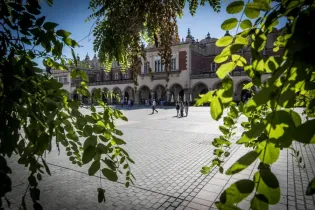
Tourism also helps sustain interest in historic landmarks, local crafts, and culinary traditions. The development of these attractions should support their authenticity and preserve their place in the everyday life of Kraków residents.
Residents themselves also benefit from exploring the city. Initiatives such as Kraków Fortress Days, guided city walks, and the municipal “Friend of Kraków Badge” programme encourage people to discover the history of their surroundings. These activities provide opportunities to gain knowledge and strengthen connections with the place they call home.
Growth that respects residents and the environment
Such a broad impact requires both reliable data and effective cooperation. These enable the city to plan more effectively and evaluate the consequences of tourism for residents and the economy.
The preliminary findings of the tourism impact study support the direction outlined in the “Kraków Sustainable Tourism Policy 2021–2028.” The strategy promotes development that balances the needs of residents, visitors, and businesses while protecting the natural environment.
In practice, this includes measures such as distributing visitor flows beyond the most heavily visited locations, monitoring short-term rentals, and reducing nighttime disturbances. Initiatives such as Respect Kraków, City Helpers, the Tourism Forum, Kraków Network 2.0, and Open Bracka support these efforts.
The strategy also includes concrete environmental measures. The conference transport pass encourages event participants to use public transport, while initiatives in the hospitality and food service sectors aimed at reducing food waste help conserve resources and protect the environment.
In Kraków’s increasingly diversified economy, tourism continues to generate growing value. This can be seen in jobs, contracts for local businesses, infrastructure that serves residents, a richer cultural offer, and new scientific and business connections.
Tourism is meant to work for Kraków. And Kraków is becoming increasingly deliberate in how that work is organised.
The data presented in this article come from the 2025 Tourism Traffic Survey and preliminary estimates prepared by the Foundation of the Kraków University of Economics for the study on the economic impact of tourism on Kraków’s economy in 2025.