

Hilton Garden Inn Kraków Airport in the ‘Wide Open for Sustainable Meetings’ series
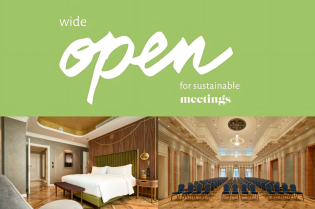
We invite you to read the next interview in the “Wide Open for Sustainable Meetings” series, in which we present good sustainability practices in the meetings, conference and hospitality sectors. This time we visit Hilton Garden Inn Kraków Airport – a modern business hotel located directly next to the Kraków Airport terminal.
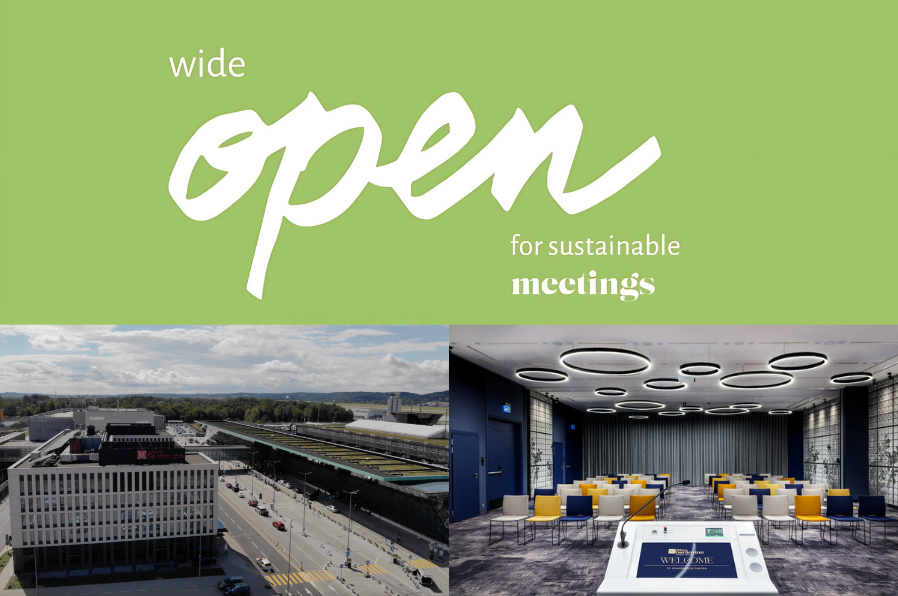
The property offers 178 comfortable rooms, 10 modern conference rooms with a total area of over 750 m², and the L’atmosphere R&B restaurant, serving international cuisine based on seasonal and local products. Its direct connection to the airport ensures convenience for meeting participants while also reducing transport‑related emissions.
From the very beginning, the hotel has been developed with environmental efficiency and responsible management in mind. Beata Dębska, Head of Sales & Marketing, discusses the hotel’s pro‑environmental and social initiatives. In the interview below, we learn about the projects implemented daily, how the hotel combines Hilton’s global standards with original ideas from the team, and how these efforts translate into the organisation of modern, responsible business events.
Which sustainability‑aligned actions have been or will be implemented in your company?
The airport hotel Hilton Garden Inn Kraków Airport was designed from the outset as a technologically modern facility. We continue to develop this investment in the direction of even greater environmental efficiency. From a technological perspective, we use, among others, a Building Management System (BMS) that monitors energy consumption, consciously purchase clean energy, and operate photovoltaic panels on the hotel roof, which already cover nearly 8% of our daily electricity needs.
We have almost completely eliminated plastic water bottles. In conference areas, they have been replaced with reusable Brita bottles that we refill ourselves. Similarly, in the rooms, guests use water poured into glass carafes, which can be refilled without limitation at filtered‑water stations located in the corridors.
Moreover, the plastic key cards commonly used in other hotels have been replaced with more eco‑friendly wooden alternatives, and all in‑room cosmetics are provided exclusively in reusable containers. After use, they do not end up in landfill but are sorted and recycled in cooperation with Clean The World.
In the kitchen, we conduct advanced waste segregation and maintain full waste documentation in the BDO system, along with the recovery of used cooking oils. Thanks to our investment in a grease separator, no oil fractions can enter the sewage system.
We work to shorten supply chains as much as possible through cooperation with local partners, including suppliers of green energy and eco‑friendly solutions that help reduce our carbon footprint. The hotel restaurant promotes seasonal products, and when selecting partners, we increasingly analyse their environmental standards and ESG policies. We have begun replacing our fleet with low‑emission vehicles and plan to install electric vehicle charging stations in the near future.
In practical terms, we have reduced printing in guest communication in favour of digital solutions. In the MICE area, thanks to Hilton’s global brand, we offer guests the possibility of organising carbon‑neutral meetings. Carbon offsetting is confirmed by a detailed report and ESG certificate from Carbon Neutral Meeting.
We understand sustainability more broadly than just ecology. Our ambition is to create a new quality of hospitality based on partnerships with employees and the community. We attach great importance to organisational culture built on cooperation and shared initiatives. One example is the “Active Hoteliers” programme, through which we promote physical activity and employee wellbeing. Our employees also created their own internal benefits system based on employee tokens (HBT Coins), awarded for participation in sports, reading, social initiatives and volunteering for the local community.
Another example of grassroots initiatives supported by the hotel is the caretaking of our green rooftop, where we planted an herb garden and a wildflower meadow, and built insect hotels.
Thanks to a thoughtful and consistently implemented HR policy, we are proud to maintain a very low negative turnover rate—below 1%. In our quarterly organisational pulse survey (eNPS), the readiness of employees to recommend the hotel as a workplace remains above +65 points on a scale from –100 to +100.
We base our management approach on three pillars: responsible governance, social impact and carbon footprint reduction. We operate in line with Hilton’s global “Travel with Purpose” strategy while also developing our own initiatives tailored to the local context.
Our systemic approach is confirmed by ISO 14001, ISO 50001 and ISO 9001 certifications, which allow us to measure and continually improve our actions.
Which initiatives are original ideas and which result from company policy?
The foundation of our efforts is Hilton’s global “Travel with Purpose” strategy, which defines the direction for emission reduction, energy efficiency, plastic minimisation and environmental data reporting. Within this framework, we use carbon‑footprint calculation tools for events and recycling programmes, including those run in partnership with Clean The World.
At the same time, we develop our own initiatives. These include the “Active Hoteliers” programme and the green roof with a wildflower meadow and insect hotels—projects initiated by our employees. They also actively contribute to pro‑environmental communication in social media, becoming natural ambassadors of shared, socially responsible initiatives.
This combination of global standards and local team creativity allows us to effectively implement solutions tailored to the specifics of an airport hotel and the needs of our guests and business partners.
Why did you choose ISO certifications? What was the process like? Are you considering Green Key or LEED?
We chose ISO 14001, ISO 50001 and ISO 9001 very consciously because they provide a systemic approach to environmental management, energy use and quality. Measurement was most important to us—working with data, indicators and realistic goals.
Certification included gap analysis, review of operational procedures, mapping of existing actions, staff training and an external audit. We discovered that many good practices were already in place, and preparing for certification further united the team.
We are also analysing other possibilities, such as the Green Key certification, primarily in terms of real environmental impact and operational benefits.
Do clients expect sustainable solutions?
From my observation—definitely yes. This trend is particularly visible in the corporate segment. There are increasingly frequent questions about ESG reporting and certification, carbon offsetting options, and specific solutions implemented to reduce plastic or support zero‑waste practices or responsible waste management. Environmental criteria are now standard in many corporate RFPs.
We observe similar signals among individual guests, who appreciate the absence of plastic bottles in rooms, access to filtered water and reduced paper usage thanks to digital registration cards completed at reception. Guests travelling by car also increasingly ask about electric‑vehicle charging options on‑site or nearby. Sustainability is becoming a real element of mature quality standards in hospitality and directly contributes to trust and the hotel’s reputation.
What trends do you observe in event organisation?
We see a growing emphasis on responsibility and transparency. Event organisers increasingly want to know the environmental impact of their events—and to have the option to offset it.
There is also growing interest in reducing unnecessary materials, such as abandoning printed promotional items in favour of digital solutions (totems, screens, mobile apps).
In gastronomy, interest in local and seasonal products is rising, reducing the carbon footprint associated with food transport and highlighting regional culinary identity. Organisers increasingly pay attention to the origin of ingredients, their freshness and the transparency of the supply chain. We also observe more demand for intimate event formats focusing on the quality of the participant experience—carefully curated menus, presentation aesthetics and greater guest interaction.
Wellbeing is also becoming more important. Organisers prioritise not only the event programme but also guest comfort—healthy menus, access to natural light and spaces conducive to concentration and collaborative work.
In our hotel, an additional advantage is the direct connection to the airport terminal, reducing the need for transport between the venue and the airport for international event participants. This not only increases convenience but also contributes to lowering the event’s carbon footprint.
Where do you seek knowledge and inspiration?
We draw inspiration from several sources—primarily Hilton’s global guidelines and strategies, international MICE trends, cooperation with technology partners and direct dialogue with our guests, whose feedback is most important to us.
Our employees also play a major role—many initiatives arise organically from a culture of partnership. We support internal education through video materials and the sharing of best practices, which help the team develop further initiatives.
At Kraków Airport Hotel, we believe that business success goes hand in hand with responsibility toward society and the environment. That is why we treat sustainability as a long-term management element, not a one-off project or marketing tool. It reflects our core values and guides our relationships with all stakeholders—guests, employees, partners and the local community.