

Kraków Leads the Way in Short-Term Rental Regulation
Working jointly with other European cities, Kraków has contributed to changes in European Union regulations concerning short-term tourist rentals. Short-term rentals have become one of the fastest-growing segments of the tourism economy, while simultaneously posing one of the greatest challenges for contemporary cities.
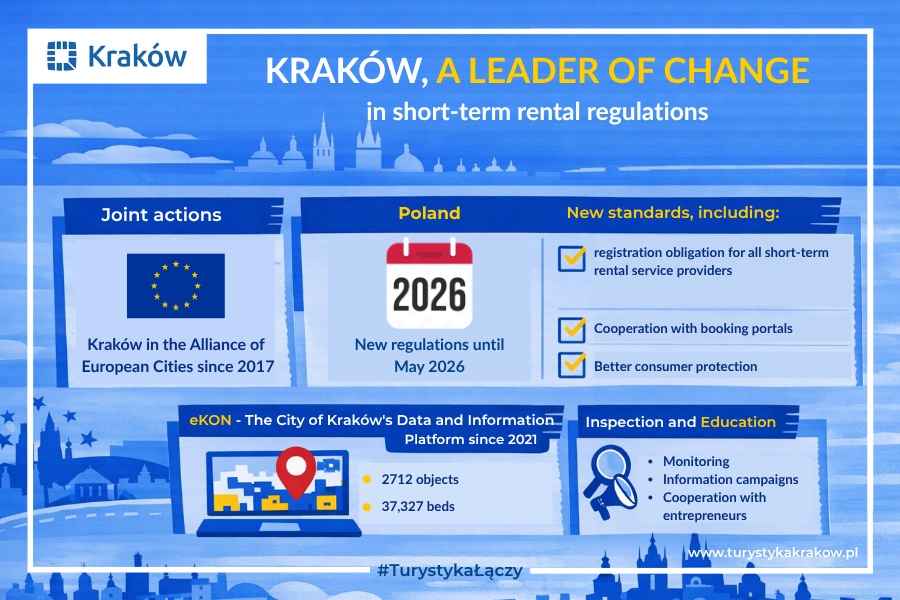
After years of coordinated efforts by Kraków and other European cities—undertaken within the framework of the European Cities Alliance for new legal regulations—local governments will now gain tangible tools to control this phenomenon. Since 2017, Kraków, alongside cities such as Amsterdam, Paris, and Berlin, has actively participated in European-level dialogue, advocating for the implementation of new oversight standards.
The outcome of these efforts was the adoption in February 2024 of EU Regulation 2024/1028, a landmark change in the regulation of the short-term rental market across the European Union. As a Member State, Poland has until May 2026 to implement the new rules into national law. The Ministry of Sport and Tourism is currently preparing legislative amendments that reflect the key solutions adopted in the EU regulation.
Kraków Sets Standards: Effective Measures and Education
It is worth recalling the binding legal framework: mayors and city presidents are responsible for maintaining registers of non-classified accommodation facilities—that is, properties other than hotels or guesthouses (the latter are registered by provincial marshal offices). In Kraków, the authority responsible for registering tourist accommodation facilities such as hostels, apartments, and rental rooms is the Mayor of the City of Kraków.
Under national provisions in force since 1997, it is the responsibility of entrepreneurs to register such facilities. However, sanctions for failing to fulfill this obligation and for operating in the so-called “grey zone” have so far proven insufficient.
For this reason, Kraków did not limit itself to passively awaiting legislative change. For years, staff of the Tourism Department have conducted systematic analytical and inspection activities—monitoring booking platform listings and carrying out on-site checks, comparing short-term rental offers with the official municipal register.
When a facility is found to be unregistered, the owner receives a formal notice reminding them of their legal obligations. In many cases, this results in voluntary registration. In more complex cases, matters are referred to the police and subsequently to court.
Kraków demonstrates that effective market regulation requires more than legislation alone—it also depends on consistent education and communication. The city runs information campaigns aimed at entrepreneurs, reminding them of registration requirements and business rules. One example is the March campaign during which city buses displayed the message: “Reminder! If you rent accommodation to tourists—register your property.”
Systemic Tools: Register and eKON Platform
In 2021, Kraków implemented a comprehensive short-term rental oversight tool that goes beyond national standards. As the only city in Poland, it launched the Krakow Accommodation Facilities (eKON) online application—a register maintained by the Mayor of the City of Kraków. The eKON platform serves several purposes:
- it is a database of legally operating accommodation facilities,
- it offers an interactive map,
- it provides access to a legal knowledge compendium.
For tourists, this means the ability to verify the legality of accommodation and thus greater safety. For entrepreneurs, it confirms that their business operates in compliance with regulations.
As of the end of March 2026, the eKON database included 2,712 facilities, offering a total of 37,327 beds. This is not a complete database, however—it includes only legally and transparently operating properties. The discrepancy between the number of registered facilities and those advertised on booking platforms results from the fact that some owners have not fulfilled their registration obligation.
Regulation as Part of Sustainable Tourism Policy
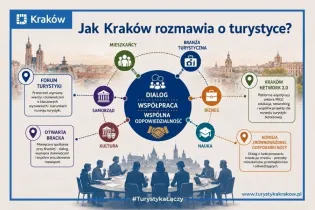
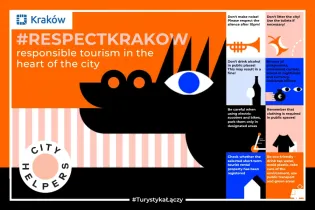
These actions form part of a broader approach to sustainable tourism development. Short-term rentals require precisely such a balanced strategy—one that takes into account the interests of residents, entrepreneurs, and visitors alike.
The End of the Grey Zone? New Regulatory Tools
Poland is currently preparing new national regulations. The most important proposed changes include:
- introducing a legal definition of short-term rental,
- mandatory registration of every rental property and assignment of a unique registration number,
- a ban on publishing listings without a registration number,
- meaningful penalties for failing to register a property,
- the possibility for municipal councils to introduce short-term rental restriction zones (from 2029).
Kraków Ready to Implement the Changes
The Kraków city administration remains fully prepared to implement the new regulations. Residents have the right to expect effective regulatory action—while respecting the rights of entrepreneurs and tourists.
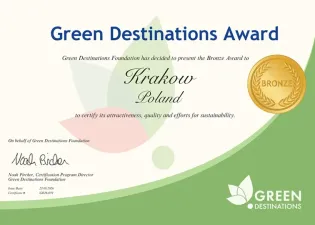
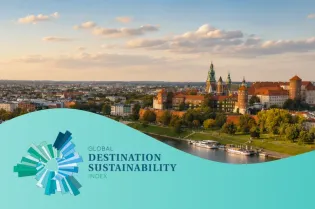
The city continues to consistently implement the principles of the “Sustainable Tourism Policy of Kraków 2021–2028.” Despite legal limitations, Kraków combines innovative tools, international engagement, and a coherent information policy.
This balanced approach—grounded in development, responsibility, and residents’ quality of life—forms the basis of Kraków’s position as a leader in tourism regulation reform.