

GDS Index – map of sustainable cities in Poland
In Poland, as elsewhere in the world, more and more cities are taking initiatives to adapt to the changing expectations of travelers, event organizers, and local communities. Sustainable development is becoming a key pillar of destination competitiveness. This publication is part of the Meetings and Events Industry in Poland 2025 Report.
Conference and event organizers increasingly expect green certifications, local products, digital materials instead of paper, and energy-efficient infrastructure solutions. Polish cities are responding to this transformation by becoming more and more involved in environmentally friendly and socially responsible activities. They are modernizing their tourism strategies, introducing certification systems, investing in sustainable transport, and educating local communities. Sustainable development is undoubtedly the direction of action for the coming years for destinations around the world, not only in relation to business tourism. This is confirmed, among other things, by a study conducted by ICCA as part of the Global Association Meetings Protocol, which identifies Sustainable Development, Equality, and Legacy as the first of four main strategic directions for meeting offices according to association clients.
Polish cities are changing together
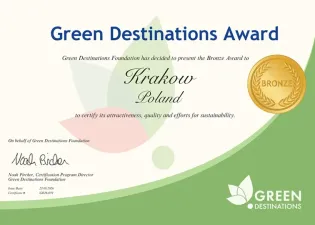
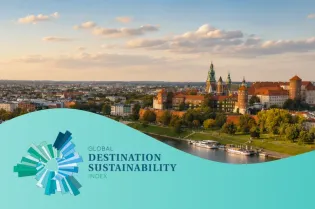
Currently, alongside the Poland Convention Bureau, which was established in 2002, there are 14 offices operating in various parts of Poland, including four centers – Krakow, Gdańsk, Wrocław, and Szczecin, have opted for specific and measurable solutions by joining the prestigious international Global Destination Sustainability Index (GDS-Index) initiative in 2022-2025.
The GDS-Index was established in 2016 by the International Congress and Convention Association (ICCA), City Destinations Alliance (CityDNA), IMEX Group, and MCI to assess the sustainability of tourist destinations based on 76 environmental, social, economic, and management criteria.
By joining the GDS-Index, cities highlight their commitment to sustainable development while influencing the awareness of the entire tourism industry. The GDS-Index opens the door to international cooperation, exchange of experiences, and implementation of best practices that help make tourism and event organization more responsible and environmentally friendly.
Krakow joined the GDS Index in 2022, followed by Gdańsk a year later, and in 2025, Wrocław and Szczecin will join the initiative. This is a sign that Polish tourism is beginning to fit into the global trend of responsible travel and event organization.
These cities not only measure their activities against the best centers in the world, such as Copenhagen, Helsinki, and Glasgow, but also use good practices and guidelines developed by the Global Destination Sustainability Movement (GDSM) – an organization bringing together leaders of green transformation in tourism and the meetings and events industry.
We are extremely pleased with the mature cooperation between the so-called green champions in Poland. In March this year, we met with representatives of cities, municipal institutions, and the industry in Gdańsk at a workshop entitled “Regenerating Polish Destinations: Sustainable Tourism in Action,” during which we jointly developed a cooperation plan for 2025–2026, strengthening efforts towards the sustainable development of Polish destinations. The workshop was led by representatives of the Global Destination Sustainability Movement (GDS Movement).
Pod koniec kwietnia bieżącego roku w Warszawie odbyła się druga edycja Responsible Incentive Travel Day 2025, zorganizowana przez Stowarzyszenie Site Poland. Podczas sesji moderowanej przez Poland Convention Bureau POT zatytułowanej „Polska – zrównoważona oferta polskich destynacji” przedstawiciele miejskich i regionalnych biur kongresowych z Gdańska, Krakowa, Łodzi, Poznania, Szczecina i Warszawy zaprezentowali swoje inicjatywy w zakresie wdrażania standardów zrównoważonego rozwoju.
Ponadto zaprezentowano wyniki audytu targów przeprowadzonego w 2025 roku przez Polską Organizację Turystyczną (POT), wskazujące na rosnące znaczenie zrównoważonego rozwoju w kontekście międzynarodowych targów. Przeanalizowano dane z ostatnich trzech lat, koncentrując się na udziale polskich wystawców w targach IMEX i IBTM (Frankfurt, Las Vegas, Barcelona). Badanie pokazuje, że aż 47% respondentów (zaproszonych nabywców), którzy rozmawiali z polskimi wystawcami, jest aktywnie zainteresowanych zrównoważonymi ofertami w polskich destynacjach.
Dodatkowe 27% zmienia swoje nastawienie po zapoznaniu się z konkretnymi propozycjami. Wyniki te podkreślają znaczenie prezentowania ofert biznesowych w kontekście miejsc łatwo dostępnych, autentycznych, otwartych na potrzeby organizatorów spotkań i wydarzeń, a jednocześnie umożliwiających organizację spotkań i wydarzeń bez szkody dla lokalnej społeczności i środowiska.
Spotlight on Poland
The program of the 4th edition of the boutique conference Spotlight on Poland (September 10-14, 2025, Gdańsk and Sopot), organized in cooperation with the Association of Conferences and Congresses in Poland (SKKP), focuses on building a more resilient and inclusive tourism sector. This year's edition of the event focuses on diversity, equality, sustainable development, and authentic human connections as the foundations for the future of the industry.
The motto “People, Place, Purpose” creates a space for transformative conversations and practical solutions that have a real impact on the development of tourism. In the first part of the event, entitled “An Inclusive Future,” sessions led by experts focus on how accessibility, equal opportunities, and sustainable development can become drivers of growth for the industry. The discussion will cover how inclusion and a responsible approach can not only combat staff shortages, but also create travel destinations that are friendly to everyone, regardless of age, ability, or origin. Redefining accessibility is not only a requirement, but also a real business advantage. It is worth observing good practices that help shape future generations in the spirit of responsible tourism.
In this way, Spotlight on Poland not only promotes unique places, but above all focuses on people – their needs, well-being, and the opportunity to develop in harmony with the surrounding world. The promotion of ecological solutions, education, support for local initiatives, and the integration of environmental certification are key elements in attracting responsible event organizers. As an industry, we have a huge responsibility to create this change, setting the path for sustainable development and promoting best practices around the world.
Destination Poland Green Academy 2025–2026
Every year, more and more Polish cities are taking concrete steps towards sustainable development. Low-emission transport strategies are being introduced, cycling and walking infrastructure is being developed, and events are increasingly being organized based on the principles of less waste. Awareness is also growing among local communities and representatives of the tourism industry, which has a positive impact on the quality and credibility of the initiatives undertaken.
We look to the future with hope, counting on more cities and regions, represented by local Convention Bureaux, to become the driving force behind responsible change. With the so-called second and third choice cities in mind, the Poland Convention Bureau POT, in cooperation with experts from Site Poland, has prepared the Destination Poland Green Academy educational program. The aim of the initiative is to promote sustainable practices in the organization of incentive events and to support more responsible promotion of cities and regions. Workshops as part of the program will be held at the end of 2025 and in the first half of 2026 in Bydgoszcz, Kielce, Łódź, Katowice, Lublin, and Poznań.
What does the GDS Index measure?
The GDS Index allows for an in-depth analysis of a city's sustainability in four main areas:
Environmental protection – air quality, low-emission transport, urban greenery, energy management.
Social engagement – quality of life for residents, inclusiveness, public health, safety, gender equality, and access to education.
Supplier activities – how hotels, restaurants, airports, and conference facilities implement environmentally friendly practices.
Destination management – the presence of a sustainable development strategy, cooperation with stakeholders, how sustainable development policies are implemented by convention bureaus and other institutions, certificates, and regular progress reporting.